The Moon is our nearest neighbour in space. Even with the naked eye, you can see bright regions and darker
patches on the Moon. Use binoculars or a telescope and you will see a tremendous amount of detail. The large,
dark plains are called 'seas', but there has never been any water in them.
Explore the Moon with us at the Planetarium - it's a rugged little world, with mountains, valleys, and a vast
number of circular walled structures called craters. Learn about the phases of the Moon, how it raises the ocean
tides, how it regulates Earth's climate, and how it is slowly making our day longer.
The Moon is also responsible for the phenomenon of eclipses. On Earth, an eclipse occurs when the Moon passes
between the Sun and the Earth and the Moon’s shadow falls onto the Earth’s surface or when the Moon passes
through the Earth’s shadow. So, there are two types of eclipses: eclipses of the Sun (solar eclipses) and
eclipses of the Moon (lunar eclipses).
There are three main types of eclipse of the Sun – partial, annular and total. They can only happen at New
Moon, but they do not happen every month because most months the Moon passes above or below the Sun in the sky
at New Moon. You must always use proper safety equipment to view any type of solar eclipse. A partial solar
eclipse occurs when the Sun, Moon and Earth are not exactly aligned and only part of the Sun’s brilliant disk is
covered by the dark disk of the Moon. There was an eclipse like this, visible from Britain and Ireland earlier
this month, on 12th August 2026.
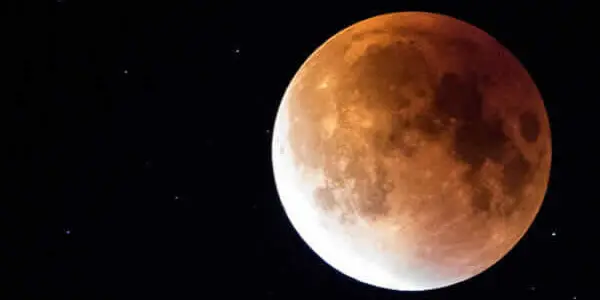
An eclipse of the Moon can only happen at Full Moon when the Moon passes either partly or completely through
the Earth’s shadow and the eclipsed portion of the Moon turns a beautiful brick-red, coppery-red or blood red
colour. They can be stunning to watch. Unlike solar eclipses, watching a lunar eclipse requires no specialized
filters or eye protection, making it completely safe to observe with the naked eye, a pair of binoculars or a
telescope. Again, they don’t happen every month because most months the Moon passes above or below the Earth’s
shadow in the sky at Full Moon.
There will be an eclipse like this, visible from Britain and Ireland, in the early morning hours of Friday,
28th August 2026.
Come to the Planetarium to find out more about this beautiful celestial event and download our handout for more
detailed information.
Please book as far in advance as you can to avoid disappointment.
If you do not see your Order Confirmation Email shortly remember to
check your SPAM folder
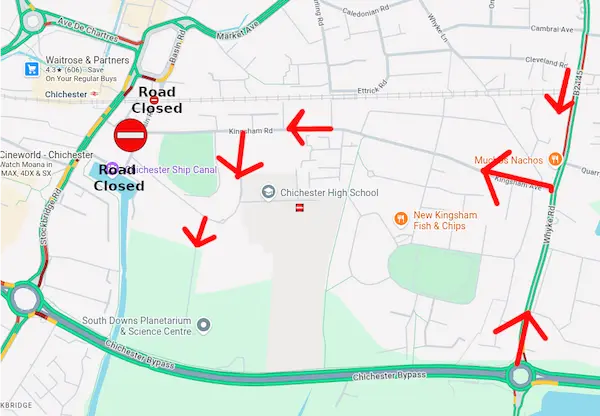
Drivers accessing the Planetarium must enter Kingsham Road from the east (via Whyke Road and Kingsham
Avenue), ignoring "Road Closed" signs, and continue to the High School gates. Pedestrians face no
restrictions, though drivers should allow extra travel time. See Map BelowDirections & Map
Only open 45 minutes before advertised show times.
Prices and Admission
Admission: Adults £8:00. Children 6 to 16 years £6:00.
Not Suitable for children over 5 years of age.
Duration 70 min Approx
Gift Aid
Please also consider making a donation under the Gift Aid scheme. It
costs you nothing and gives us more.
Download the Gift Aid form
here
Accessibility
All public areas of the Planetarium are accessible to wheelchairs.
Disabled parking bays are available
Toilets
The Planetarium has two easy access, gender neutral toilets, one of
which is slightly larger so as to accommodate carers if this is
necessary.
Seating
The seats in the main auditorium are ex-aircraft seats. Those in the
first two rows are set at a slightly reclined angle to provide the best
possible view. They can, however, be tipped forwards to enable easier
access to the rows behind when entering and leaving. The seats in the
back row do not recline. They provide a wide view of
the entire dome area, which some of our visitors prefer. The auditorium
is fully accessible to wheelchairs.
Directions & Map
Important DO NOT rely on Google Maps
There is no direct access off the Chichester Bypass. All access via
Kingsham Road only.
SEE MAP BELOW.
Satnav postcode use PO19 8EB
The only entrance for walkers, cars buses, lorries,
coaches, PoGo sticks or Space Hoppers, is by the High School entrance in
Kingsham Road, then follow the signs to "The South Downs Planetarium and
Science center" It is located at the southern end of the Chichester High
Schools campus.
Car Parking
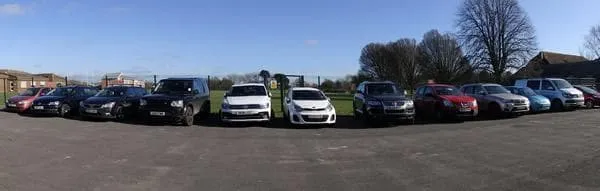
Please note there are two free car parks available.