Come to the Planetarium for a flight of fancy to explore our planetary neighbours.
In the Northern Hemisphere it is summer and the days are long and nights are short, so
it is necessary
to stay up quite late for it to get dark enough to do a bit of stargazing on a clear evening. In the
Southern Hemisphere it is winter and the days are short and the nights are long and dark. From dark
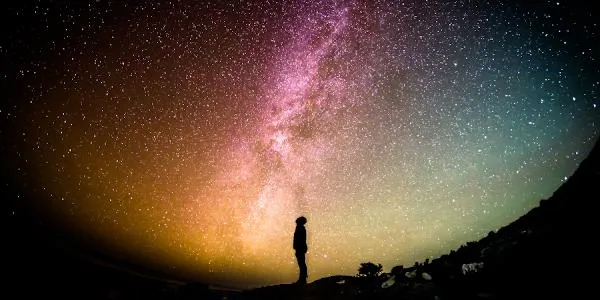
locations, the faintly glowing band of the Milky Way will be seen arching right across the sky, but this
is increasingly hard to see for many people as light pollution increases in urban fringe and semi-rural
areas.
As we travel southwards from Southern England, we find that the beautiful central parts of the Milky
Way, near the constellations of Scorpius, the Scorpion and Sagittarius, the Archer, become easier to see
and we can appreciate the rich star fields and lovely clouds of glowing gas and dark lanes of dust that
we find there. Further south still we can see the stars of the ‘Southern Cross and the Large and Small
Magellanic Clouds, two little satellite galaxies of the Milky Way. In far southern parts we might even
see the Southern Lights, the aurora australis, dancing in the skies over above Antarctica.
The Moon will full on 1st August so bright moonlight will make general stargazing difficult at the and
end of July and for the first week of August. Thereafter the skies will be darker until the end of
August.
Of the bright planets, Saturn is now rising as darkness falls and its rings are always a fine sight in a
telescope. The more brilliant Jupiter rises some time later and its four largest moons are an easy
target for good binoculars or a small telescope. The lovely planet Venus becomes a brilliant object in
the early morning sky as dawn breaks by the end of August.
Come to the Planetarium for a breathtaking tour of the night sky as seen from many different parts of
the World, and find out more about what there is to be seen on clear evenings at this time of the year
wherever you happen to be.
booking Process
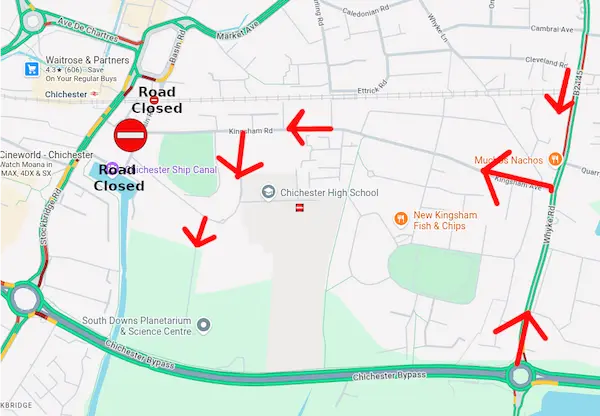
Drivers accessing the Planetarium must enter Kingsham Road from the east (via Whyke Road and Kingsham
Avenue), ignoring "Road Closed" signs, and continue to the High School gates. Pedestrians face no
restrictions, though drivers should allow extra travel time. See Map BelowDirections & Map
Please book as far in advance as you can to avoid disappointment.
If you do not see your Order Confirmation Email shortly remember to
check your SPAM folder
Only open 45 minutes before advertised show times.
Prices and Admission
Admission: Adults £8:00. Children 6 to 16 years £6:00.
Not Suitable for children over 5 years of age.
Duration 70 min Approx
Gift Aid
Please also consider making a donation under the Gift Aid scheme. It
costs you nothing and gives us more.
Download the Gift Aid form
here
Accessibility
All public areas of the Planetarium are accessible to wheelchairs.
Disabled parking bays are available
Toilets
The Planetarium has two easy access, gender neutral toilets, one of
which is slightly larger so as to accommodate carers if this is
necessary.
Seating
The seats in the main auditorium are ex-aircraft seats. Those in the
first two rows are set at a slightly reclined angle to provide the best
possible view. They can, however, be tipped forwards to enable easier
access to the rows behind when entering and leaving. The seats in the
back row do not recline. They provide a wide view of
the entire dome area, which some of our visitors prefer. The auditorium
is fully accessible to wheelchairs.
Directions & Map
Important DO NOT rely on Google Maps
There is no direct access off the Chichester Bypass. All access via
Kingsham Road only.
SEE MAP BELOW.
Satnav postcode use PO19 8EB
The only entrance for walkers, cars buses, lorries,
coaches, PoGo sticks or Space Hoppers, is by the High School entrance in
Kingsham Road, then follow the signs to "The South Downs Planetarium and
Science center" It is located at the southern end of the Chichester High
Schools campus.
Car Parking
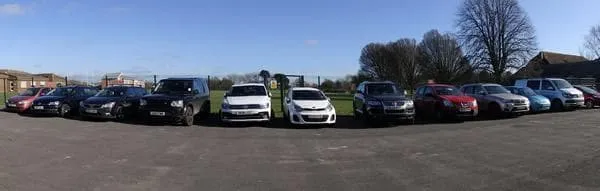
Please note there are two free car parks available.